Who we are
Our founders
A foundation started by two people in a pueblo in Mexico, and the daughter who was there when it began.
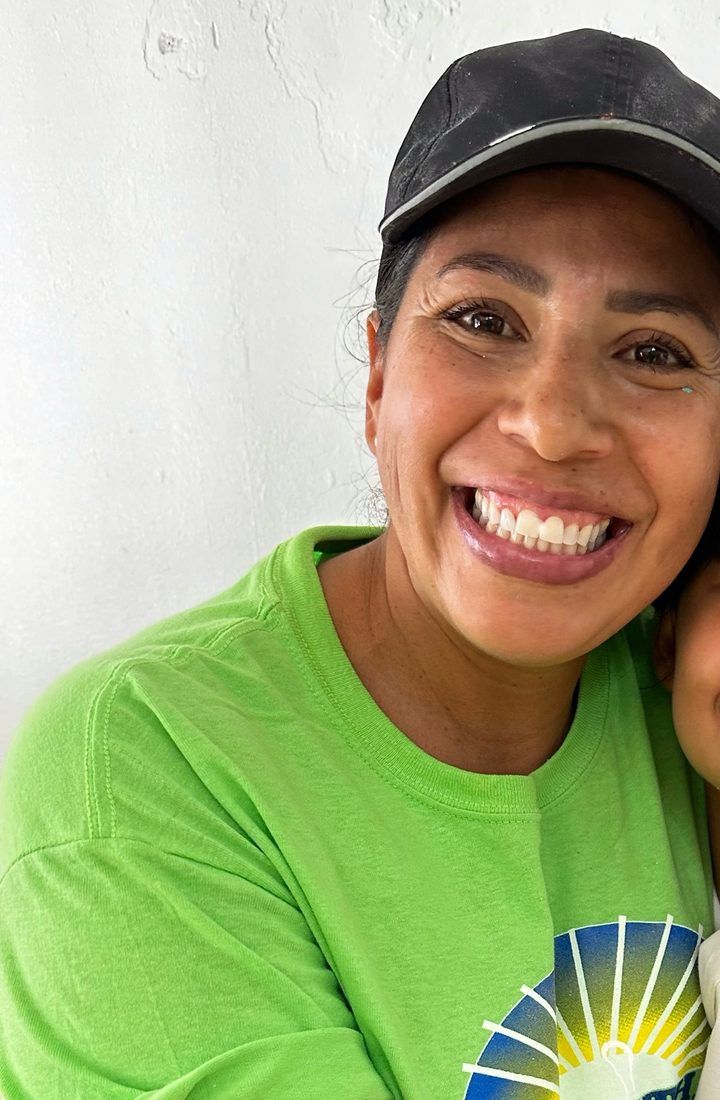
Elvia Kimball
Founder & Managing Director
Born and raised in Pénjamo, Guanajuato, Mexico, Elvia Kimball came to the United States in 1995 at the age of seventeen. Her connection to Mexico — its people, its culture, its communities — has remained a central part of her life ever since.
Elvia founded Love La Vida Foundation out of a deeply personal conviction: that every child deserves to feel loved, valued, supported and hopeful about the future. She believes meaningful service begins with relationships — listening to people, understanding their circumstances, respecting their dignity, and working alongside those who already know their communities best.
As Founder and Managing Director, she leads the Foundation's relationships with children's homes, community organizations, and the young people they serve. She guides the programming — social development, English-language learning, life skills, and preparation for adulthood and employment.
For Elvia, Love La Vida is not simply about providing resources. It is about showing up, building relationships, creating opportunities, and helping young people see possibilities for their lives that they may not yet see for themselves.
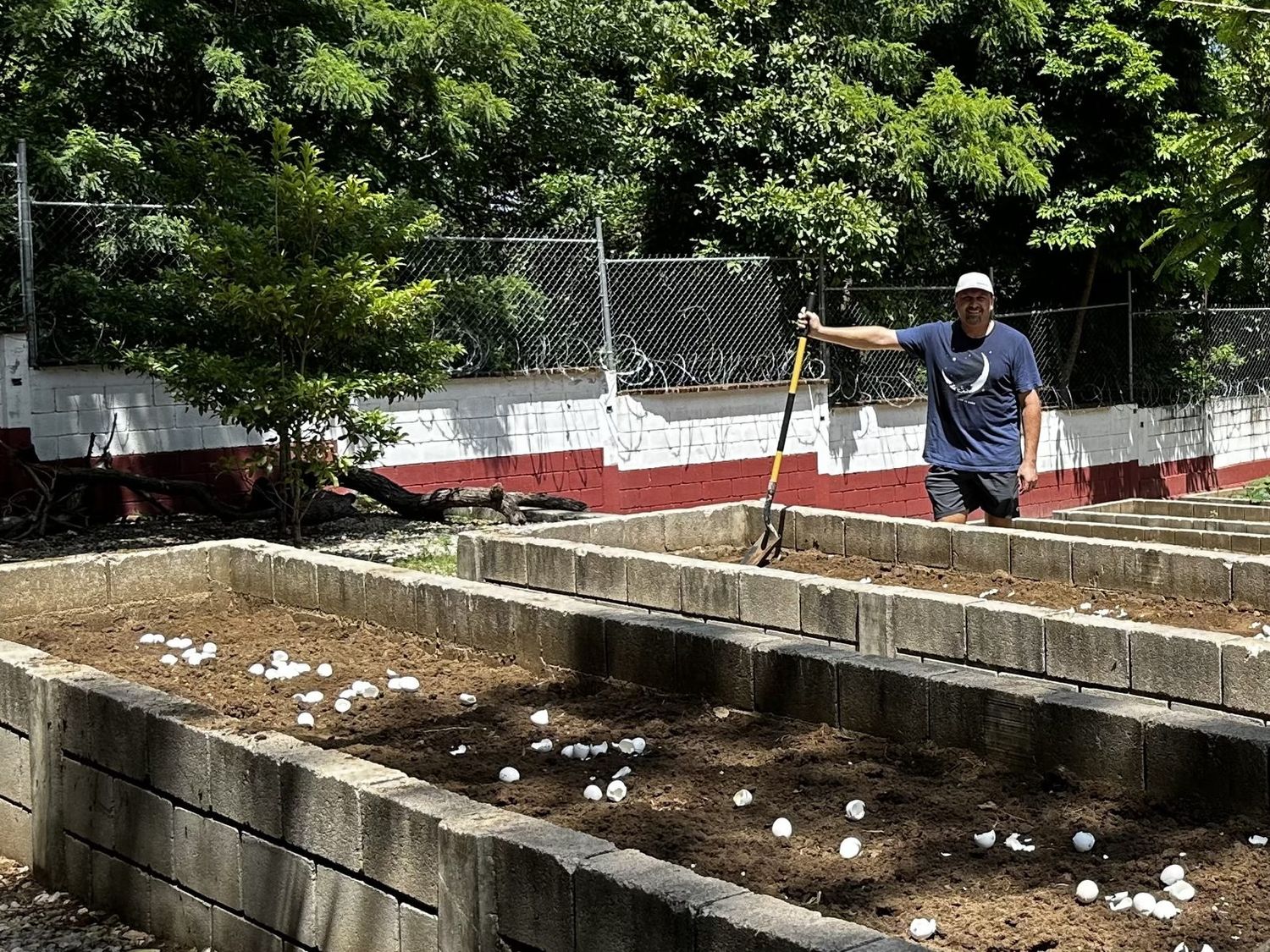
Scott Kimball
Strategy, governance and infrastructure
Scott Kimball is an Industrial & Organizational psychologist who has spent his career applying behavioral science to organizations, leadership, talent and growth. He holds a PhD in Industrial & Organizational Psychology.
He learned his Spanish on Colombia's Caribbean coast and has spent time in most of its cities — Valledupar, Santa Marta, Barranquilla, Cartagena, Sincelejo, Montería — alongside years of work in Mexico and Costa Rica. Those years shaped the conviction that runs through this foundation: that solutions are built in partnership with local communities, not imposed on them from outside.
In 2001, at an executive retreat in San Diego led by Ken Blanchard, the group was asked to write a personal mission statement. Scott wrote six words and has not needed to revise them since.
“To maximize the potential of people.”
Scott Kimball's life mission statement, written in 2001
It has held professionally and personally, and it is the shortest honest answer to why he is doing this. A child in residential care is not short of potential. They are short of the conditions that let potential turn into anything.
At Love La Vida, Scott supports Elvia's vision through strategy, governance, program design, measurement, partnerships, fundraising, and the systems that let the work scale. The I/O background is most useful exactly where the Foundation is most ambitious — human development, English-language learning, workforce readiness, and the transition into independent adulthood.
Outside the Foundation he runs Scalewrights, a value-creation firm for founder-owned companies, and he writes. Four of his books are published in Spanish — written in the language, not translated into it, which is the same instinct that shapes this site.
Together
Intentionally complementary
Elvia drives the mission. Scott increases its leverage.
Elvia brings the heart, the cultural connection, the relationships and the day-to-day leadership of the work. Scott brings psychology, organizational development, business and strategy, and builds the infrastructure capable of extending it.
We both speak Spanish, every day, at home. That isn't a credential we're offering — it's how this household works, and it's why Elvia's sentence came out in two languages in the first place. It also means we never work through an interpreter. We hear what people say, rather than what somebody decided to pass along.
And we practice this ourselves. We're active, we travel, we keep learning, we're still making plans — all of it together. We love our lives because we've had the relationships, the safety and the opportunities that make a life loveable, and none of that was earned by deserving it more than anyone else. The young people we work with want exactly what we want. What they haven't had is the conditions.
Between us, this foundation's two countries are not abstractions. Elvia is Mexican and carries her culture with her everywhere. Scott's Spanish was learned on the Colombian coast, and vallenato — the music of that coast — is still his favorite. The foundation's name came out of something Elvia said. The program's Spanish name, Los Caminos de la Vida, came from a Colombian song. Neither came from a branding exercise.
The two convictions turn out to be the same one. Elvia's is that every child deserves to feel loved, valued and hopeful. Scott's, written down a quarter of a century ago, is to maximize the potential of people. Love La Vida is what those look like when they are pointed at the children with the least access to their own.
What we believe
These are God's children.
We respect God, and we believe He is behind this work. Nobody reading this has to share that in order to support what we do — but it is the honest answer to why we do it, and leaving it out would be a strange kind of modesty.
A child in a children's home is not a case, a statistic, or a photograph for a newsletter. They are somebody's child, and they are God's. We believe He wants them to have the conditions for a life that prospers — and we do not mean money. We mean a life with people in it, work they are good at, a future they can describe out loud, and the freedom to choose it.
That conviction is the reason behind nearly every rule on this website. It is why we do not publish a child's face. Why we ask a young person what they want instead of telling them, and count nothing they did not choose. Why we say dignity rather than charity, and treat a home's director as a partner rather than a recipient. Why a volunteer is asked never to make one child into their project.
If a child belongs to God, then pity is the wrong posture and so is rescue. What is owed to them is not our sympathy. It is the conditions.
Most of the homes we work alongside are Catholic, and we have never once had to translate this. Imago Dei — the image of God in every person — is the same conviction in older words, and it is the ground we stand on together.
Elvia and Scott have been together since 2018. They are happily married and share one commitment: that philanthropy should do more than meet today's need. It should expand tomorrow's possibilities.
Between them they have six children, all grown — three of Elvia's and three of Scott's, Rylie among them — and two grandchildren.
Rylie
Scott's daughter Rylie was with us in Chiapas in 2023, and she helped build this foundation. She scraped and repainted a dormitory wall. She sat on a concrete step painting the fingernails of a line of little girls, who afterward stood in a circle and photographed their hands — the photograph on our home page.
She had finished her third round of chemotherapy shortly before that trip. She came anyway, and she worked.
Rylie died of cancer on July 13, 2026. Carrying this work through is part of what she left us, and her name belongs here with ours.
Where a child begins should never determine how far that child can go.