Mexico · Colombia
Love La Vida Foundation builds long-term development programs inside children’s homes in two countries — and publishes everything it builds, free, for any home that wants it.
Mexico
Colombia
Who
Children and young people in residential care
Ages two to eighteen, plus the two years after they leave.
Where
Mexico and Colombia
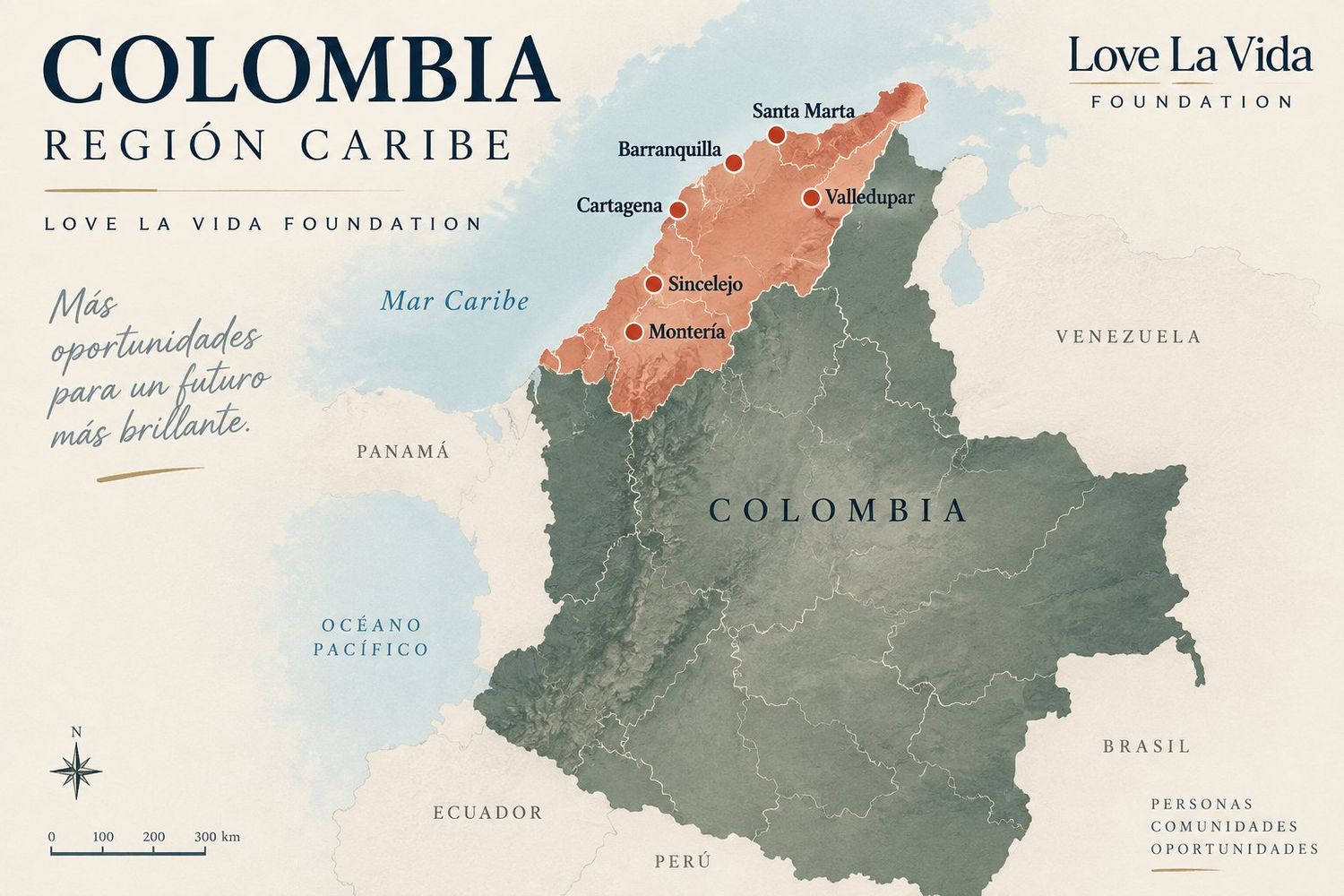
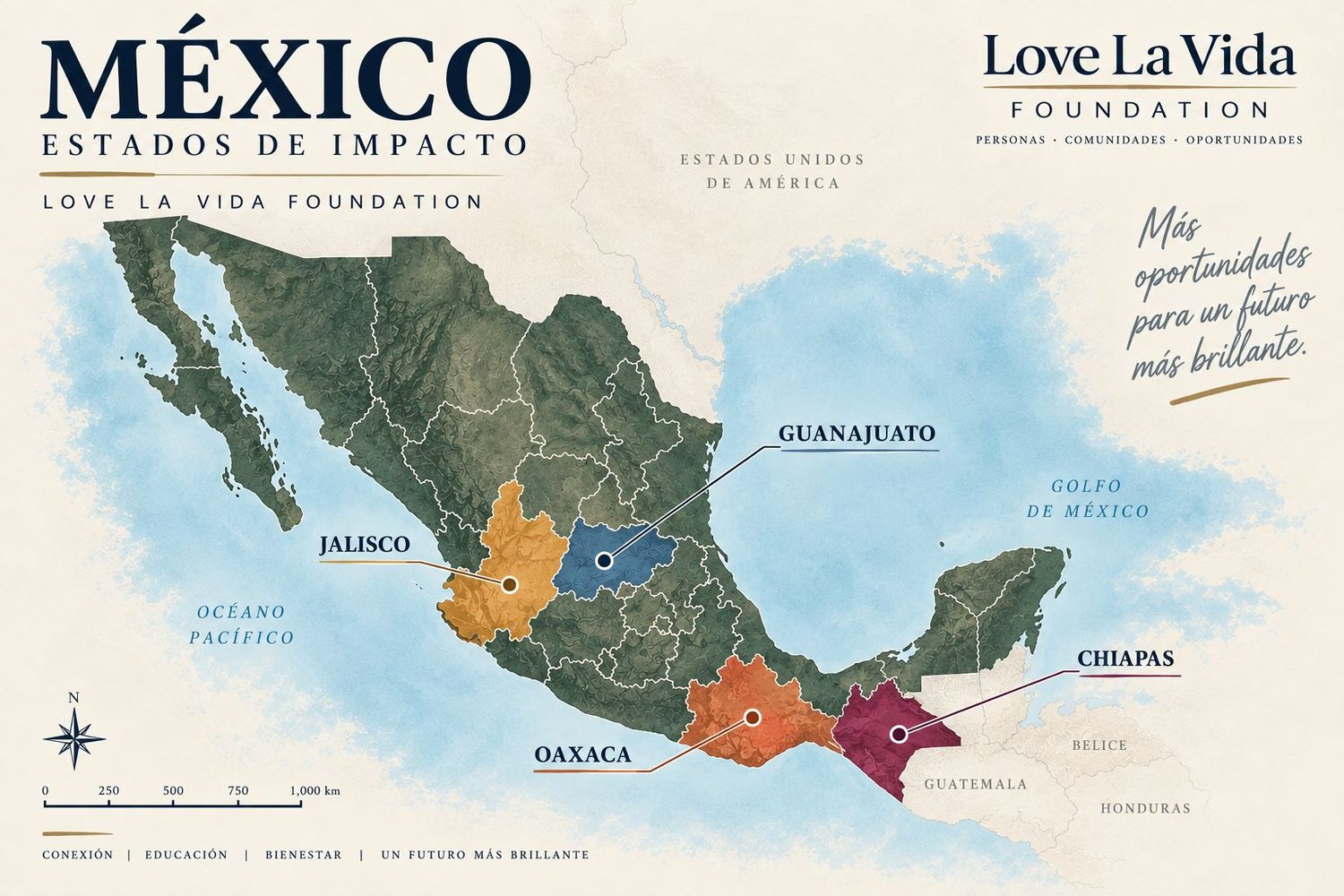
Chiapas, Oaxaca, Guanajuato and Jalisco. Colombia's Caribbean coast.
What we run
One program, installed inside a partner home
Social development, English, workforce readiness, and the transition into adult life.
Where we are today
In formation
The entity is being established. No results yet, and we will not pretend otherwise.
How it started
We were sitting in a small pueblo in Mexico, the two of us, just talking. We had been visiting children's homes and we couldn't stop thinking about what we'd seen. The children were fed. They were clothed. They were in school. By every measure that goes into a report, they were fine.
And they were going through the motions.
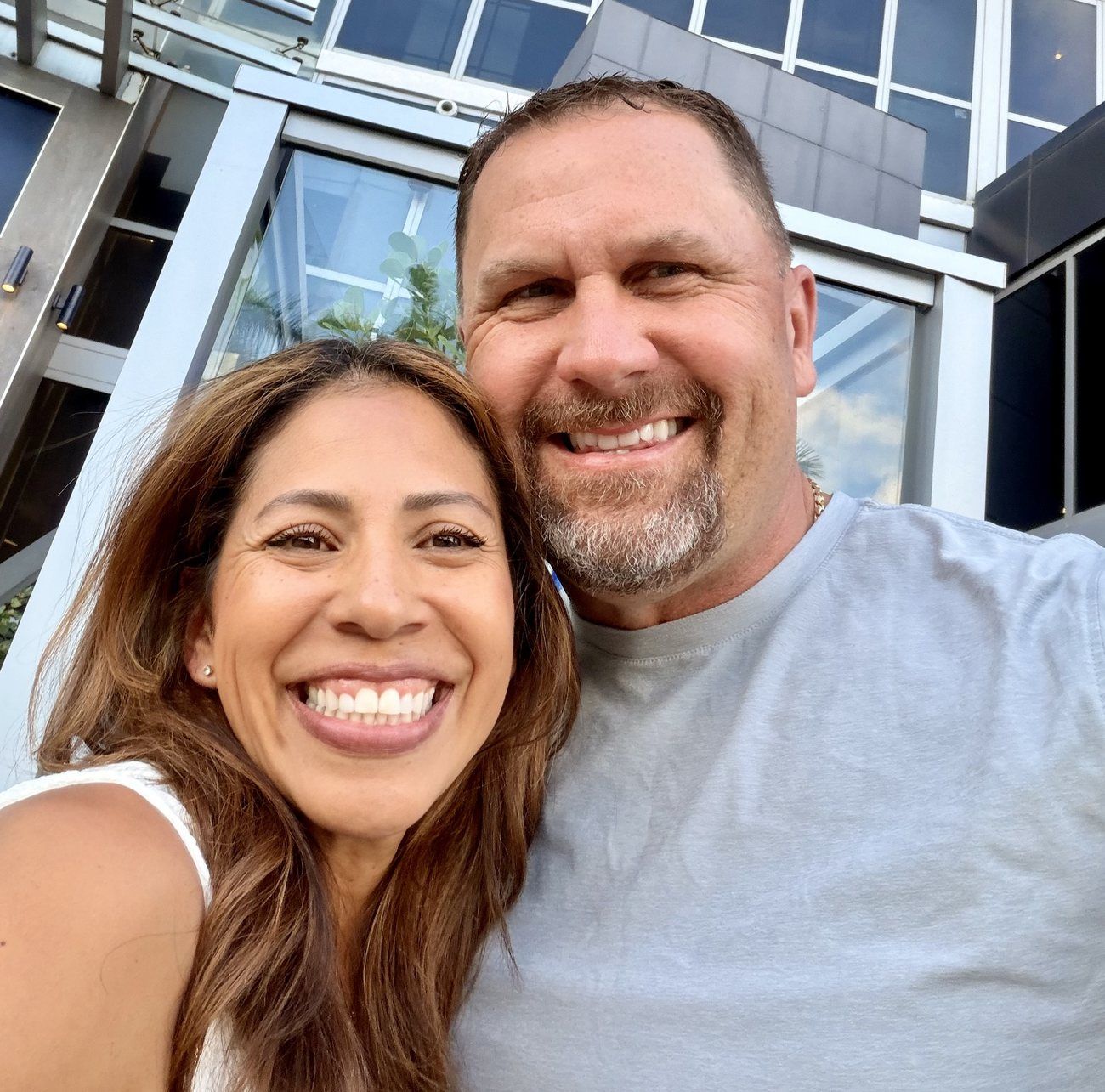
We were crying a little, because we wanted so badly to help and didn't know how. And then Elvia said:
“Papi, I don't want these kids to just go through the motions in life. I want them to love their life!”
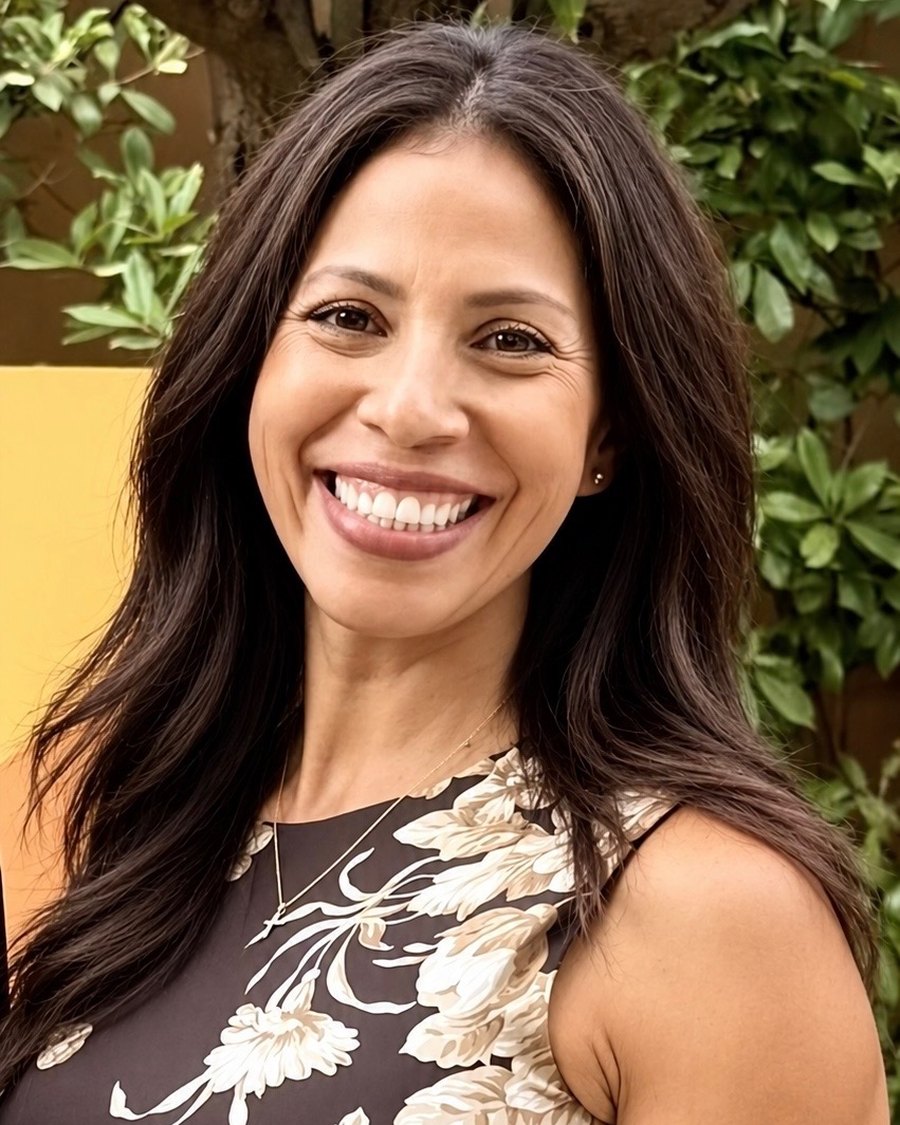
Elvia Kimball, founder
That is the whole foundation. She said it in two languages without thinking about it, the way she says most things, and we haven't found a better sentence since.
Everyone has heard live la vida.
We are after the other verb.


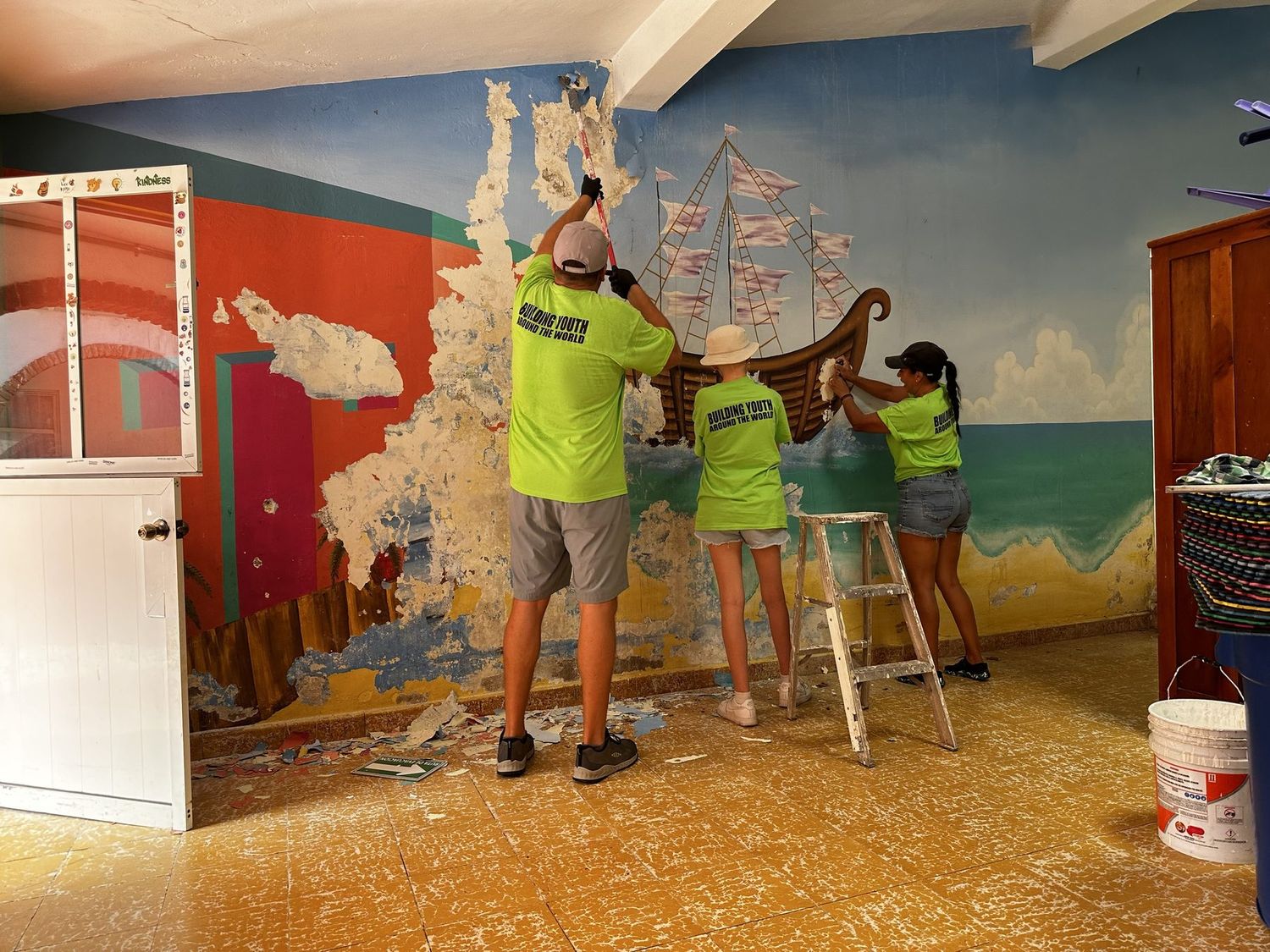
Chiapas, Mexico, 2023 — the visit this foundation grew out of. Scott's daughter Rylie came with us and worked on that wall, shortly after finishing her third round of chemotherapy.
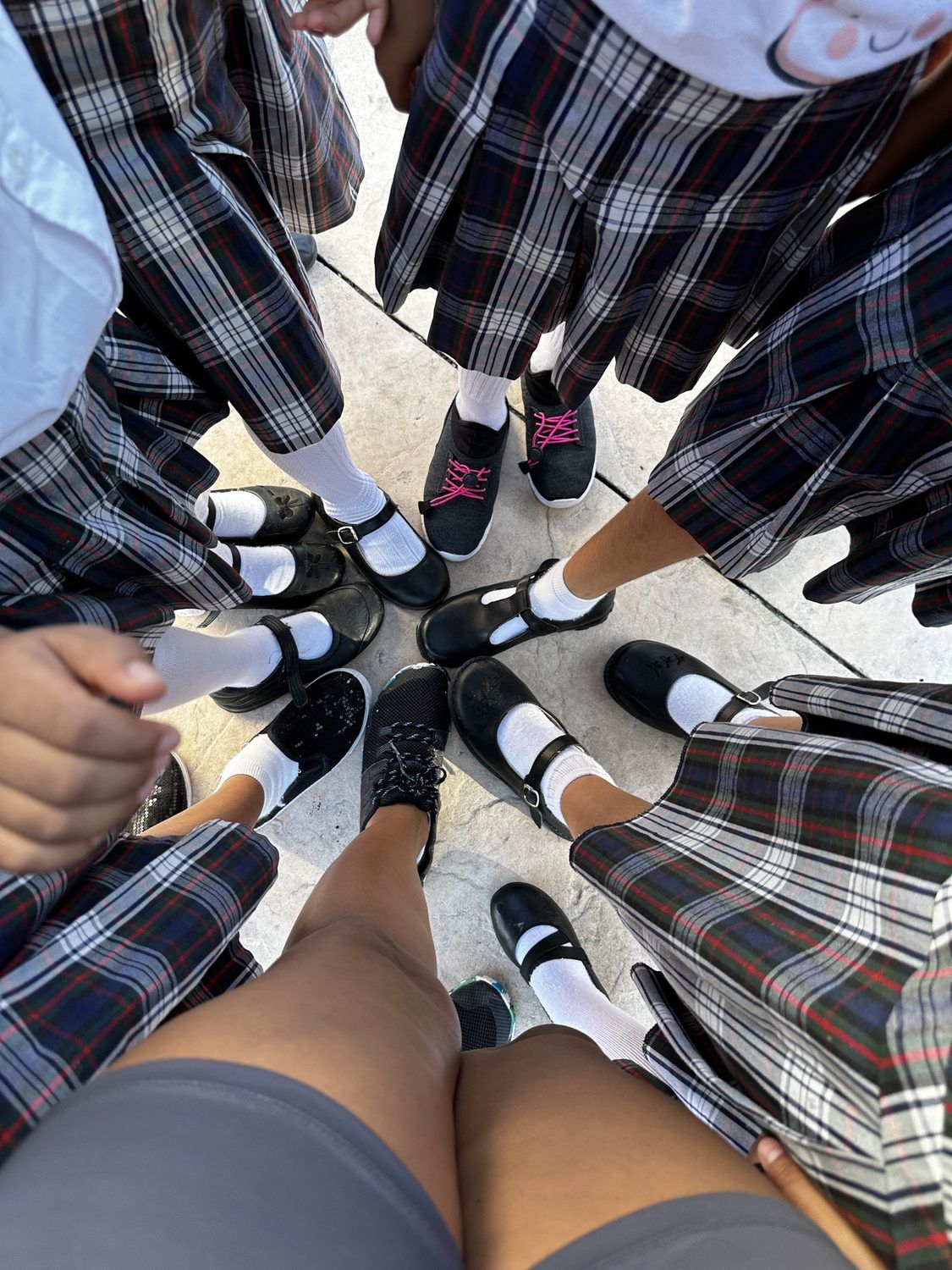
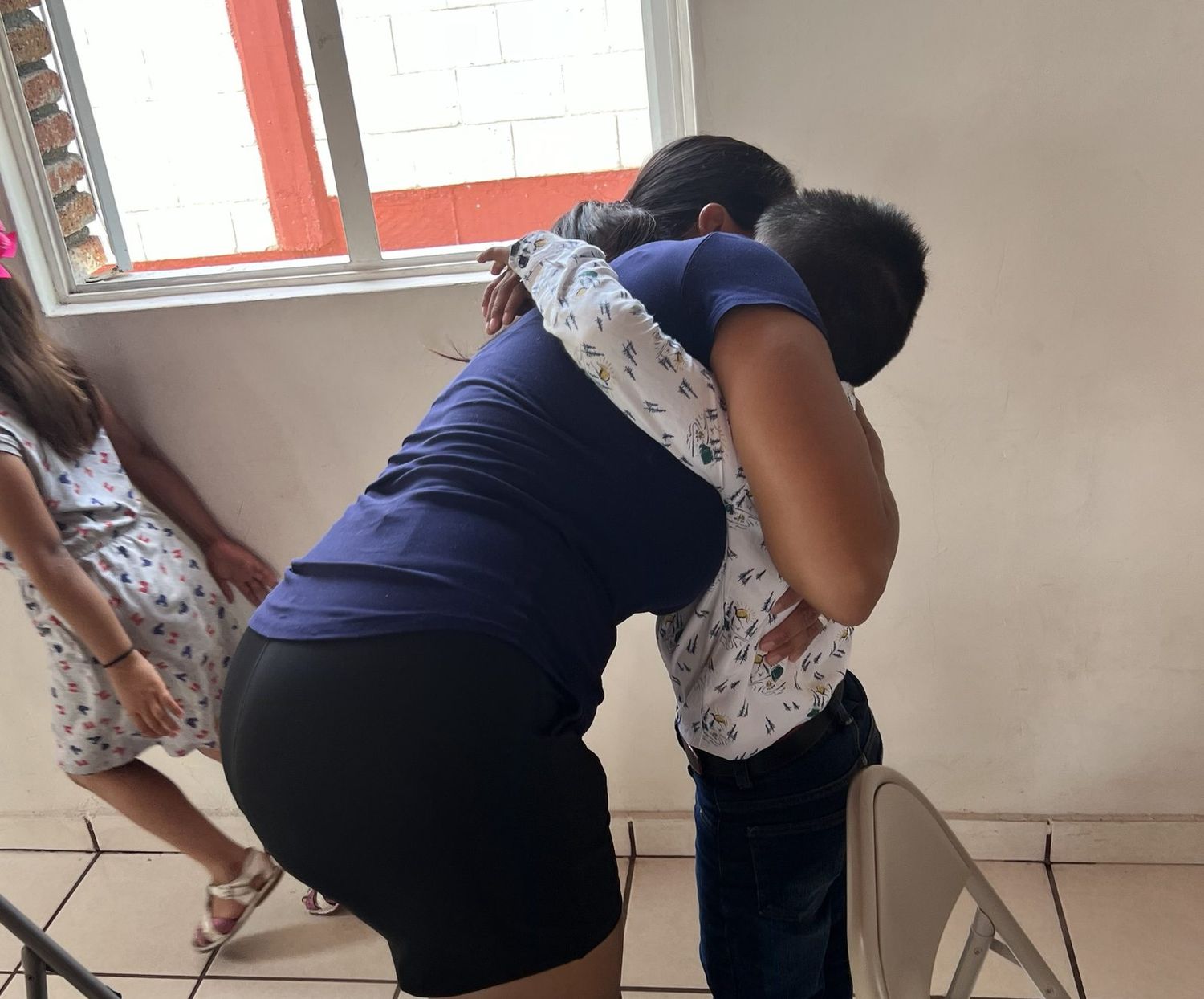
Real moments. Protected identities.
Every photograph here is real. We do not publish images of the children we serve — not their faces, not their names, and never a name alongside a place. Where a moment can only be shown with a child in it, we publish an illustration instead, and the people in those illustrations are invented.
The model
Everything we build sits on three ideas. They are not sequential stages. They have to be present at the same time, and in this causal order, or the whole thing comes apart.
Safety, routine, and adults who are still there next year. Without it, nothing else is learnable — a child spending their attention on whether they are safe has none left for anything we teach.
Predictable expectations, practice, and responsibility that grows. Institutions are usually good at this part. Good enough that it gets mistaken for the whole job.
A future the young person can describe out loud, and chose themselves. This is the part almost nobody funds, because it is hard to photograph and harder to evidence.
How capability actually transfers
Every one of our documents runs on this single ladder, in three vocabularies that map one to one — because three different people use it for three different jobs. A caregiver transferring a skill, a team recording evidence, and the young person rating themselves.
| Rung | The adult transfers | The team records | The young person says |
|---|---|---|---|
| 1 | I do it | Knows it | I know it |
| 2 | We do it together | Practices it | I practice it |
| 3 | You do it with support | Does it with support | I do it with help |
| 4 | You do it | Does it | I do it on my own |
| 5 | You solve it | Solves it | I solve it when something goes wrong |
| 6 | You teach it | Teaches it | I can teach it to someone |
Nothing is marked as learned before rung four. Nothing counts as readiness to leave before rung five — because rung five is the month the budget doesn’t reach, the shift that goes wrong, the bus that doesn’t come. That is the one that predicts.
And there is no rung zero. Not yet observed means we have not watched yet. It is an instruction to the adult, never a verdict on the child.
What gets developed
The same twelve from age two to age eighteen, at rising resolution. At fifteen they open into fifteen transition domains, because someone about to leave needs documents, transport, technology and housing named separately.
A young person can be green in twelve domains and red in documents, housing, income or network. Those four are conditions, not scores. The gap sets the exit date — not the average. We never average the colors.
The library
We wrote the method down. Then we published it — the whole thing, in Spanish, with no email box in front of it, for any home in Mexico or Colombia whether they ever work with us or not. A home feeding thirty children on a budget that does not stretch should not have to trade anything for a manual.
21
Documents
600+
Pages, in Spanish
1
Capability ladder
$0
And no email required
Start here
Forty-eight things a child actually says, and what to say back. The only one usable by a new caregiver on their first shift with no training at all.
Then this
Conduct, disclosure, and the reporting routes for both countries — ICBF Línea 141, the Procuraduría de Protección, and a directory to fill in before you need it.
Then this
A hundred activities with an age, a duration and a real-life transfer. It answers the question a house asks every single day: what do we actually do this afternoon?
The map
The twelve domains and what each looks like at every age band. Everything else is the detail of one square on this grid.
The clock
Twelve months, fifty-two weeks, one capability at a time. The rhythm that puts the other twenty documents into motion.
And sixteen more
Each one the detail of a domain. One ladder, one set of domains, one owner per rule — so a director is not holding six different systems.
See the whole library and download any of it →
Every document carries the same authorship note and the same standing notice: they are pending review by a licensed clinician in Mexico and Colombia. Training material, not clinical protocol. Your local child-protection rules always take precedence.
Why this one
We built a program, not a grant budget
Pathways is a curriculum, a schedule, a training package and a measurement instrument that installs inside an existing home in ninety days. Most funders send money. We send a method, and then we train local staff to run it without us.
We fund the part nobody funds
Food, beds, uniforms and schooling are necessary and comparatively well covered. Belonging, agency, mastery and a horizon are not — because they are hard to photograph and harder to evidence. That gap is the entire reason we exist.
We pay for continuity, not for visits
The injury these young people carry is that adults arrive and then stop arriving. So the long relationships belong to trained mentors who stay three years with the same six to eight young people. Visitors are welcome, and warmly — they just come as a group and leave as a group.
We follow them past eighteen
Institutional care ends on a birthday and most support ends with it. Our program runs twelve to twenty-four months past that date, and the indicator we hold ourselves to is where a young person is six, twelve and twenty-four months after leaving.
We work in Spanish, without an interpreter
Both founders are bilingual and speak Spanish at home every day. We talk to directors, teachers, mentors and young people ourselves. In this work that is not a convenience — it is the difference between knowing what is happening and being told about it.
We will publish what fails
Once a year, with the same prominence as what worked. We would rather lose a donor early than build an organization that has to manage its own story.
What we do
Most organizations serving children in institutions fund survival. We fund the part that decides whether a young person wants their own future.
“Someone who is still here next year.”
A trained, paid mentor on a three-year commitment — because a volunteer who stops appearing repeats the injury we are trying to undo.
“Someone finally asked what I wanted.”
Institutional life removes decisions. Every part of our program is built so the young person chooses. If they didn't choose it, it doesn't count.
“I am someone who plays, builds, fixes, draws.”
Twelve months of coaching and equipment in a pursuit they picked themselves. Competence is where identity comes from.
“A tomorrow I can describe out loud.”
Documents, housing, tuition and the same mentor past eighteen — the age at which institutional care ends and most support disappears.
How it is supposed to work
Activities are easy to describe and easy to fake. This is the causal claim underneath them, and every measurement we take is aimed at one of these links.
Need
No one is staying
Basic care is met. Continuity, choice and a plausible future are not.
Intervention
One program, weekly
A paid mentor, English, life skills and something each young person chose.
Capability
They can do things
Speak, work with others, handle money, hold a conversation in a second language.
Opportunity
Doors that open
A certificate, an internship, an employer introduction, a place to study.
Outcome
A life they chose
Housed, working or studying, still in contact with an adult, two years on.
See the full Pathways model — cohorts, curriculum, weekly rhythm and measurement →
Impact
Nearly every new organization blurs these two columns. We are going to keep them apart on this page for as long as the foundation exists, and the right-hand column is the one we expect to be judged on.
Targets — year one
Achieved to date
No children have been served by a Love La Vida program yet. The entity is still being formed. The first report will follow twelve months after the first installation, and it will contain numbers rather than adjectives.
An honest limit. With a first cohort of this size, our numbers will be a management tool rather than research. They will tell a mentor which young person is slipping, early enough to act. We will not claim more than that.
Where we work
The two countries at the top of this page were chosen because we know them, not because they were available. Four Mexican states in two clusters, and Colombia’s Caribbean coast.
We would rather profoundly change a few hundred lives than superficially touch a hundred thousand — which means saying no to places we could plausibly reach. We will not run a program anywhere we do not already have a working relationship, and we will not open a second country before the first installation has a year of results behind it.
Who we are
Love La Vida began with the children Elvia met — and with a name that works in both the languages this foundation lives in. Love is a word nearly every young person in Mexico and Colombia already knows. La vida is theirs, and stays in their language.
We would rather profoundly change a few hundred lives than superficially touch a hundred thousand.
Born and raised in Pénjamo, Guanajuato. Leads the mission, the partnerships, the programs and the work on the ground. This is hers.
Industrial & organizational psychologist, PhD, with earlier degrees in psychology and clinical psychology. Governance, capital, measurement, and the infrastructure that lets the mission scale.
We practice this ourselves
We don't ask these young people to want something we don't live.
We're active. We travel. We keep learning. We're still curious, still trying things, still making plans — and we do all of it together.
We love our lives because we've had the relationships, the safety and the opportunities that make a life loveable — and none of that was earned by deserving it more than anyone else. The young people we work with want exactly what we want.
What they haven't had is the conditions. Those conditions are the whole job.
Get involved
No money changes hands today. Tell us you're in, and we'll come back to you when we can properly receive it.
See the full year-one budget → Partner Work with usChildren's homes, employers, schools and clinicians. We install a program, we don't run a home.
The full partnership guide → Serve Come and build somethingA week of real work and real time with the kids — paint, repair, soccer, the trip to the zoo. Everyone is screened and signs a waiver.
Upcoming trips → Talk to us Ask a hard questionEspecially the skeptical ones. We would rather answer them now than be discovered later.
Get in touch →Stay close
Love La Vida Foundation is being established now. We are not asking for money yet. If you would like to follow the work as it is built — including the parts that don't go to plan — leave your email.
You’re on the list. We write rarely, and only about the work — including the parts that don’t go to plan.
We write rarely, and only about the work. Your address is never shared.